Atlas Pro — 1-yr history, chart & CSV exports, new features, daily brief, MCP connector
— ₹399/mo.Atlas Pro — 1-yr history, chart & CSV exports, new features, daily brief, MCP connector
— ₹399/mo.Atlas Pro — 1-yr history, chart & CSV exports, new features, daily brief, MCP connector
— ₹399/mo.PORTFOLIO
Each product is a working contract: pre-emptive endpoint reference, sample request and response, source citations, and a clear roadmap status. The shared spine — knowledge graph, time-series grid layer, regulatory intelligence engine — means cross-product calls compose cleanly. Pricing and access live in one place at energymap.in/pricing.
ENTERPRISE API · OPEN ACCESS
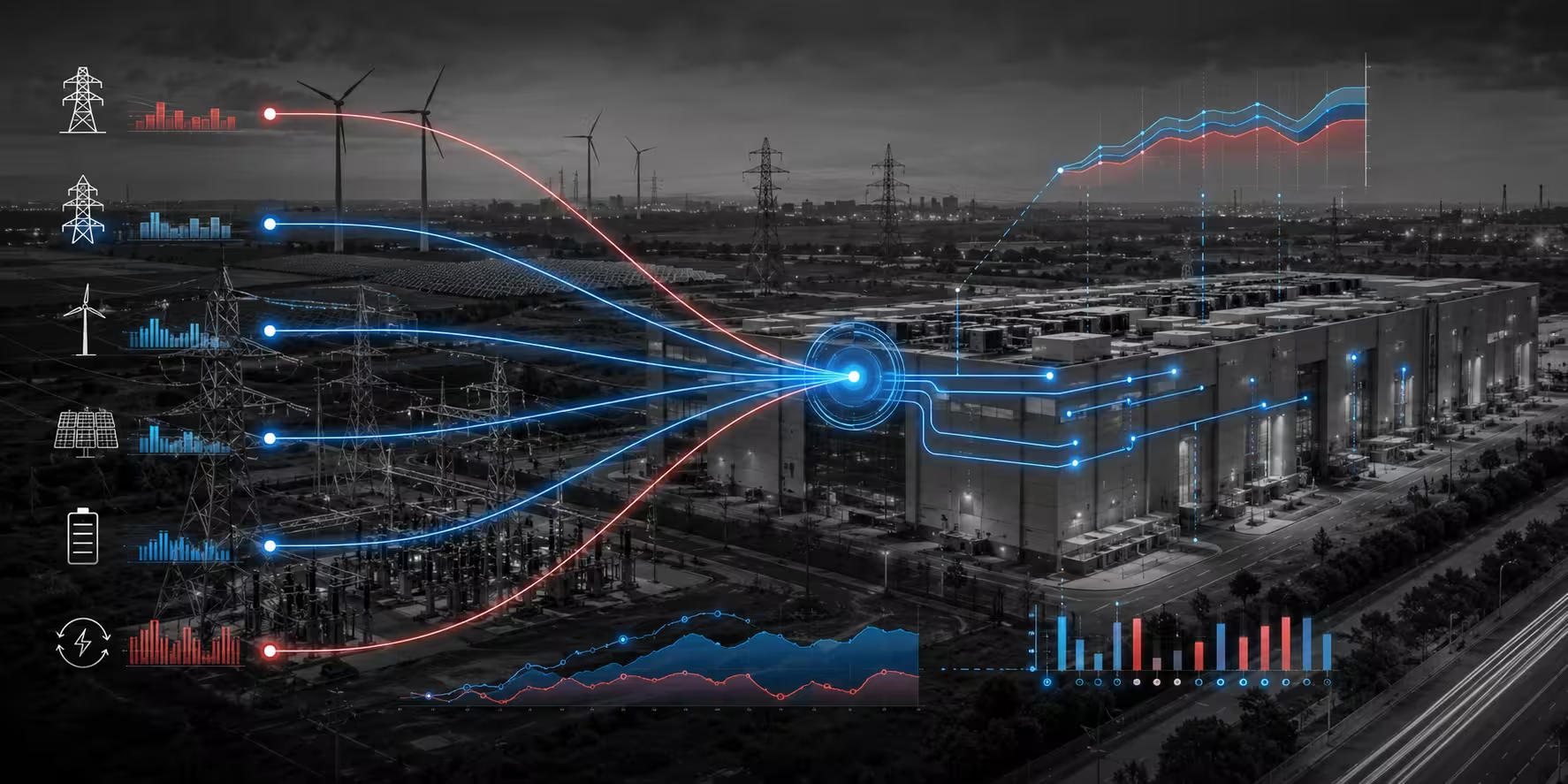
Indian C&I PPA economics live in 30 SERC tariff orders that revise every six to nine months. The Bharat Landed-Cost API ingests every order, every IEX and PXIL clearing block, and every regulatory amendment, and returns the real landed ₹/kWh for any consumer location, voltage class, contract demand, and load profile. Grid retail, Green Open Access, group captive, RTM, and hybrid RE+BESS — compared on one call, with the source order cited and a regulatory-risk delta since the last revision.
Read product page →
ENTERPRISE API · IES TASKFORCE TRACK
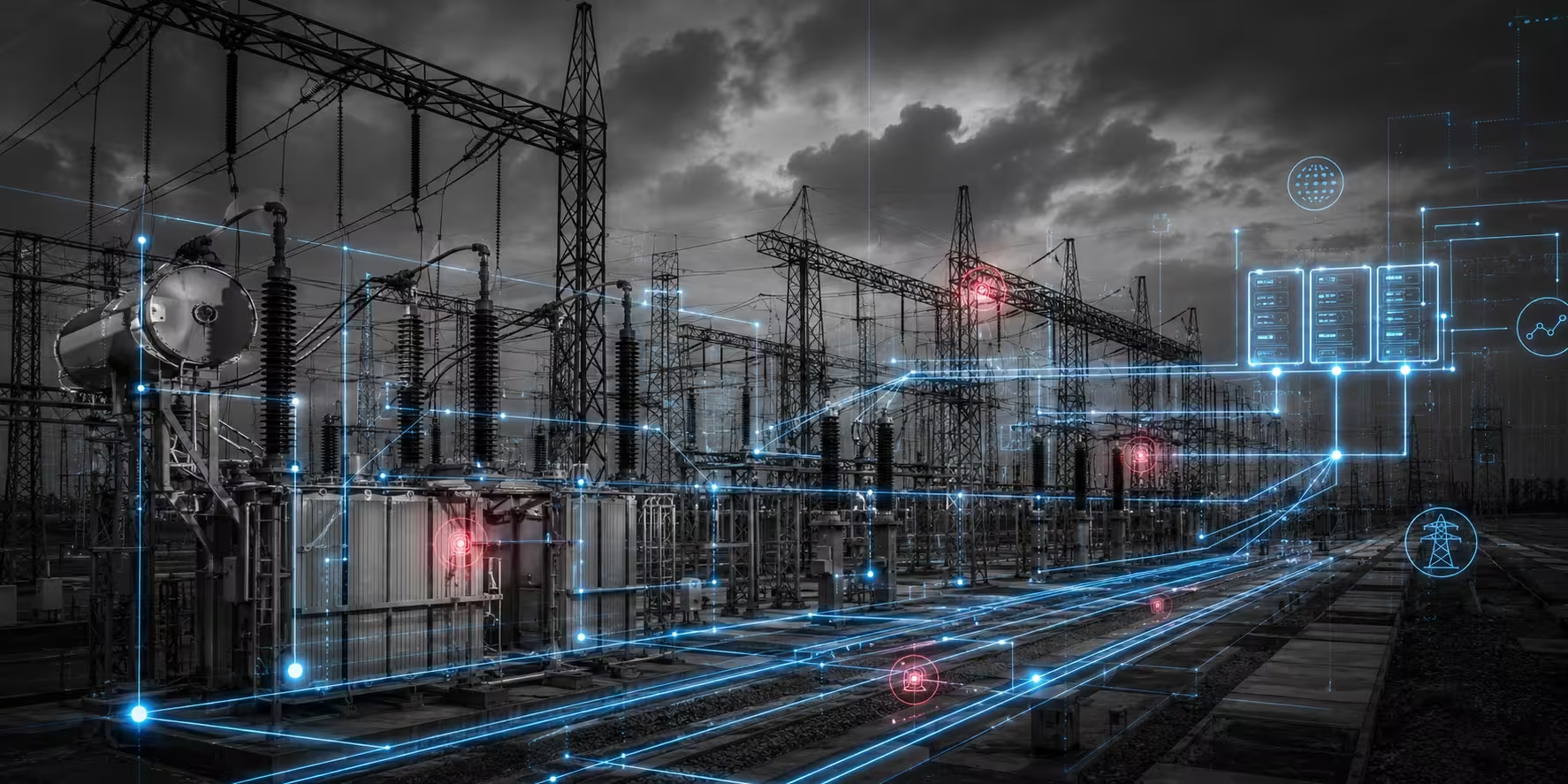
The single most-asked question in Indian renewables — is there room at this substation — has not had a clean answer. CTUIL connectivity LOAs, CEA capacity-addition data, STU substation lists, RLDC outage records, and ISTS expansion plans live in different silos. Today the answer comes from a phone call to a friendly engineer at the relevant LDC. Connectivity is now scarcer than land. The ISTS Hosting Capacity Atlas reads every public source, joins them on a substation-by-substation graph, and returns the answer in JSON — built as a TSP-conformant reference implementation under the IES v0.5 substation data model.
Read product page →
ENTERPRISE API · RISK ANALYTICS
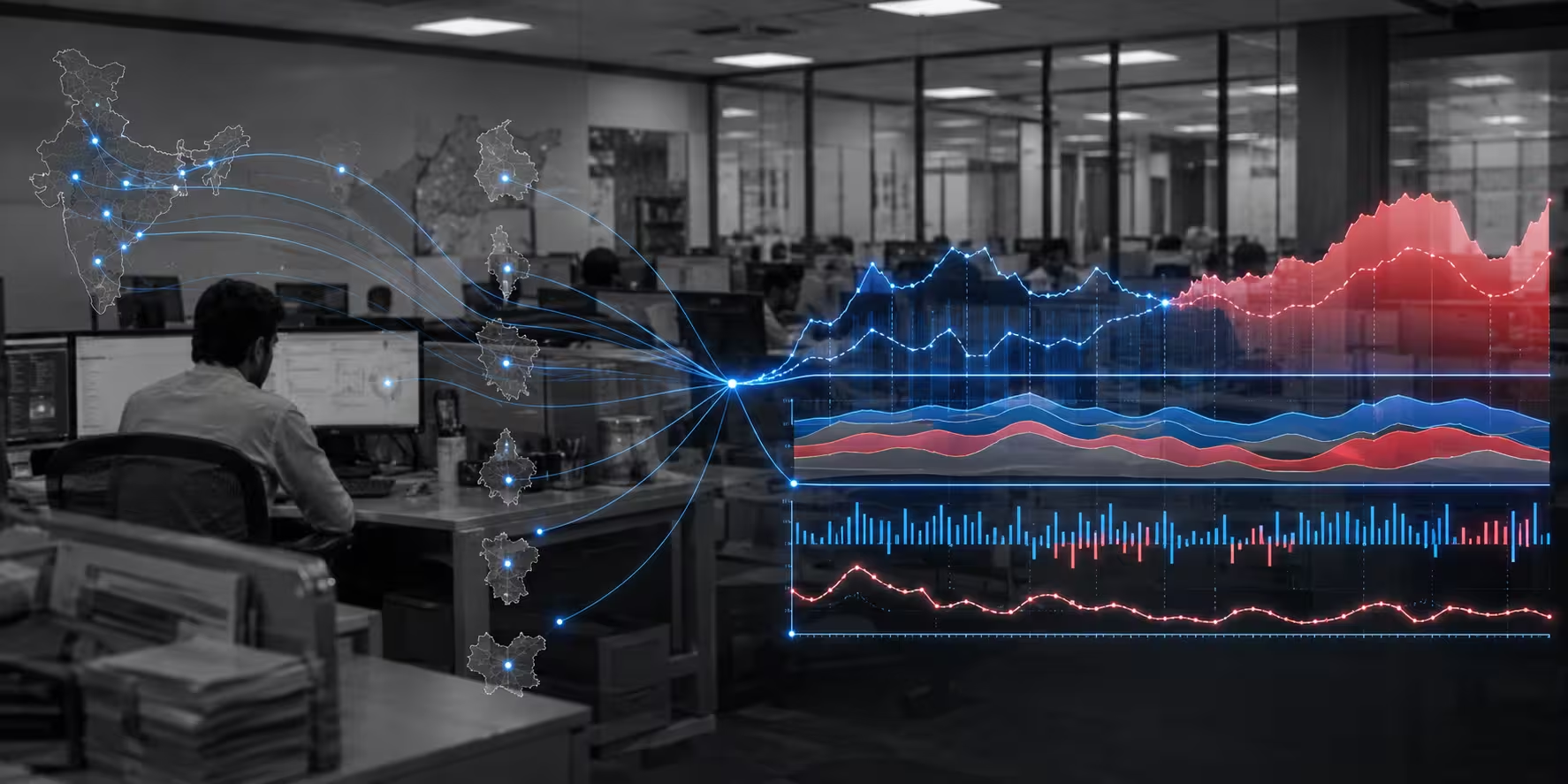
Curtailment is the largest unpriced risk in Indian renewables. Karnataka curtailed solar materially through FY24, Tamil Nadu wind through monsoon, Rajasthan transmission-driven cuts. PPA tariffs are still bid as if curtailment is zero. As BESS arrives, the question shifts from will I be curtailed to what is my forward capture rate at substation X in 2028 given queue depth and ISTS constraints — and no one answers it quantitatively in India today. This API does. Production-cost dispatch, queue-depth-aware capture rates, methodology versioning on every response.
Read product page →
ENTERPRISE API · CARBON ACCOUNTING
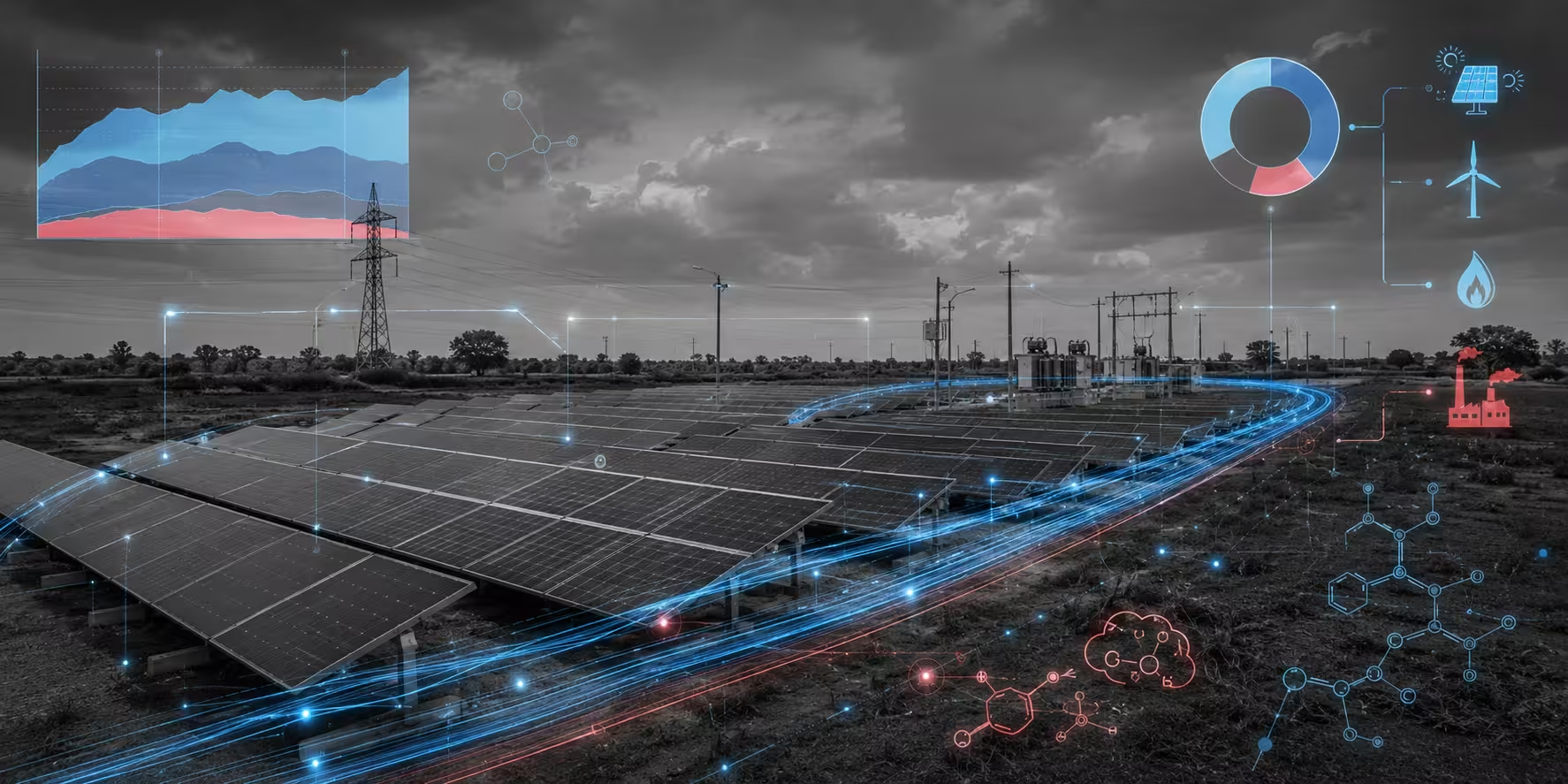
India's grid carbon factors have been poorly characterised at granular spatial and temporal resolution. There is no equivalent of Electricity Maps for India — no 15-minute, state-level, audit-grade carbon intensity API. Annual paper-matching for corporate RE claims hides the truth: a company with a daytime solar PPA can still consume coal-heavy power in evening peaks. The Time-Block Carbon API publishes two strictly separated signals — a location-based average for Scope 2 reporting and an operational marginal signal for load shifting — with a full audit trail back to the underlying RLDC, NLDC, IEX, and CEA snapshots.
Read product page →
ENTERPRISE API · STORAGE
BESS revenue stacking is a black box in India. Every developer's spreadsheet uses different assumptions about hourly price spreads, ancillary participation, and outage-event premia. There is no standard forward price curve, no standard storage revenue model, no public benchmark for what a 100 MW four-hour battery in Bhadla actually earns in 2027. The Storage Revenue Stack API publishes a probabilistic answer — built on the same dispatch backbone as the Curtailment & Capture-Rate API, with model versioning on every response so an investor can replay any past projection against any future model.
Read product page →
ENTERPRISE API · DISTRIBUTION
The low-voltage distribution network is India's biggest data blind spot. DISCOMs are approving rooftop solar and EV charging connections without knowing the actual thermal limits of local distribution transformers. Result: nuisance tripping, equipment failure, and weeks of back-and-forth between DISCOMs, installers, and CPOs. The Distribution Transformer Stress API replaces static "10 kW solar limit" rules with a dynamic envelope — fed by AMI smart-meter time-series, irradiance, EV load forecasts, and a physics-informed thermal model of the DT itself.
Read product page →
