
6.5 GW
IDCR base case · 2030
Operational IT load from a 1.5 GW 2025 baseline.
Independent assessment of capacity, investment, power, water, fibre, operators, city markets, regulation, and the outlook to 2030.
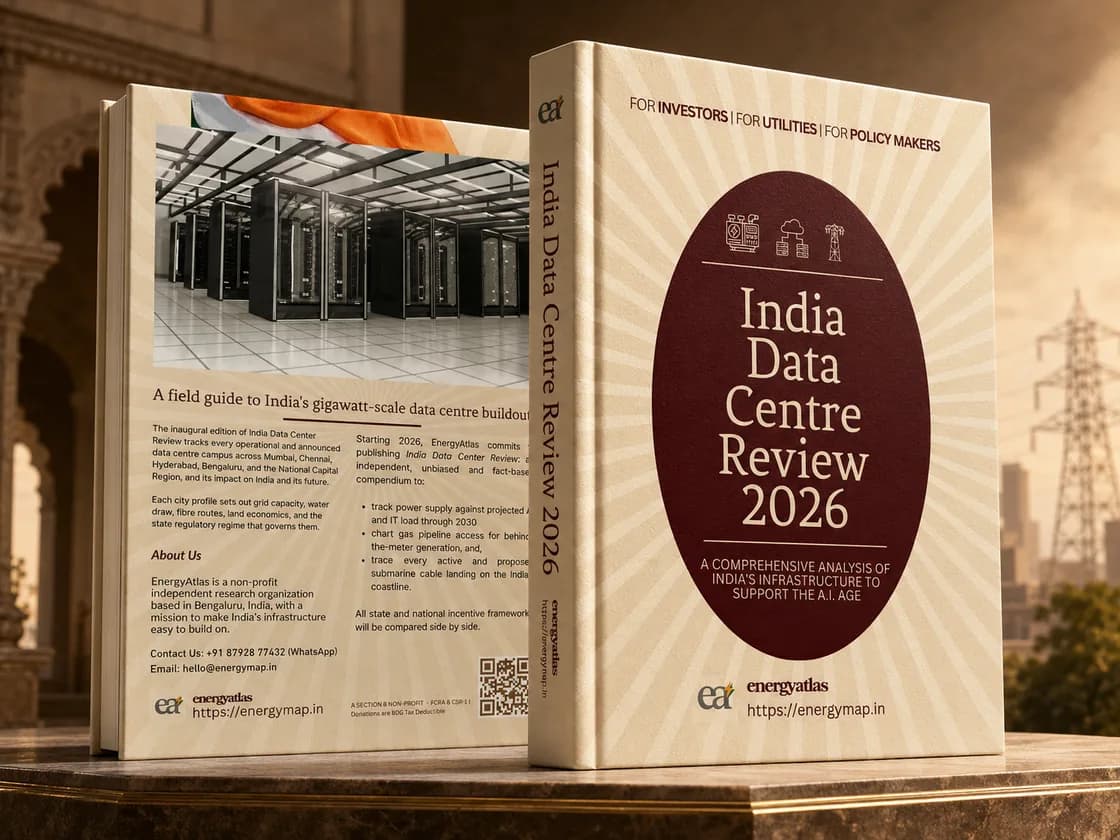
The Review compares its 2030 scenarios with Wood Mackenzie's 12 GW forecast and the Ministry of Power's reported 26.3 GW additional-load estimate. Each figure is classified by measure, baseline, horizon, and evidence date.
Operational IT load from a 1.5 GW 2025 baseline.
Assumes faster grid delivery and announced-project conversion.
Operational capacity from a 2.2 GW 2025 baseline.
Additional AI data-centre grid load reported by the Ministry of Power.
The Review covers grid connections, cooling systems, fibre resilience, approvals, project execution, and the economics of announced capacity.
Assessment of grid connection timelines, tariffs, reliability, and firm-power requirements.
Comparison of Mumbai, Chennai, Hyderabad, Delhi NCR, Bengaluru, Pune, and Kolkata across six infrastructure and market criteria.
Review of transactions, operators, state incentives, approval requirements, and project execution risks.
Charts, maps, scorecards, and comparative assessments provide evidence for market and infrastructure decisions.
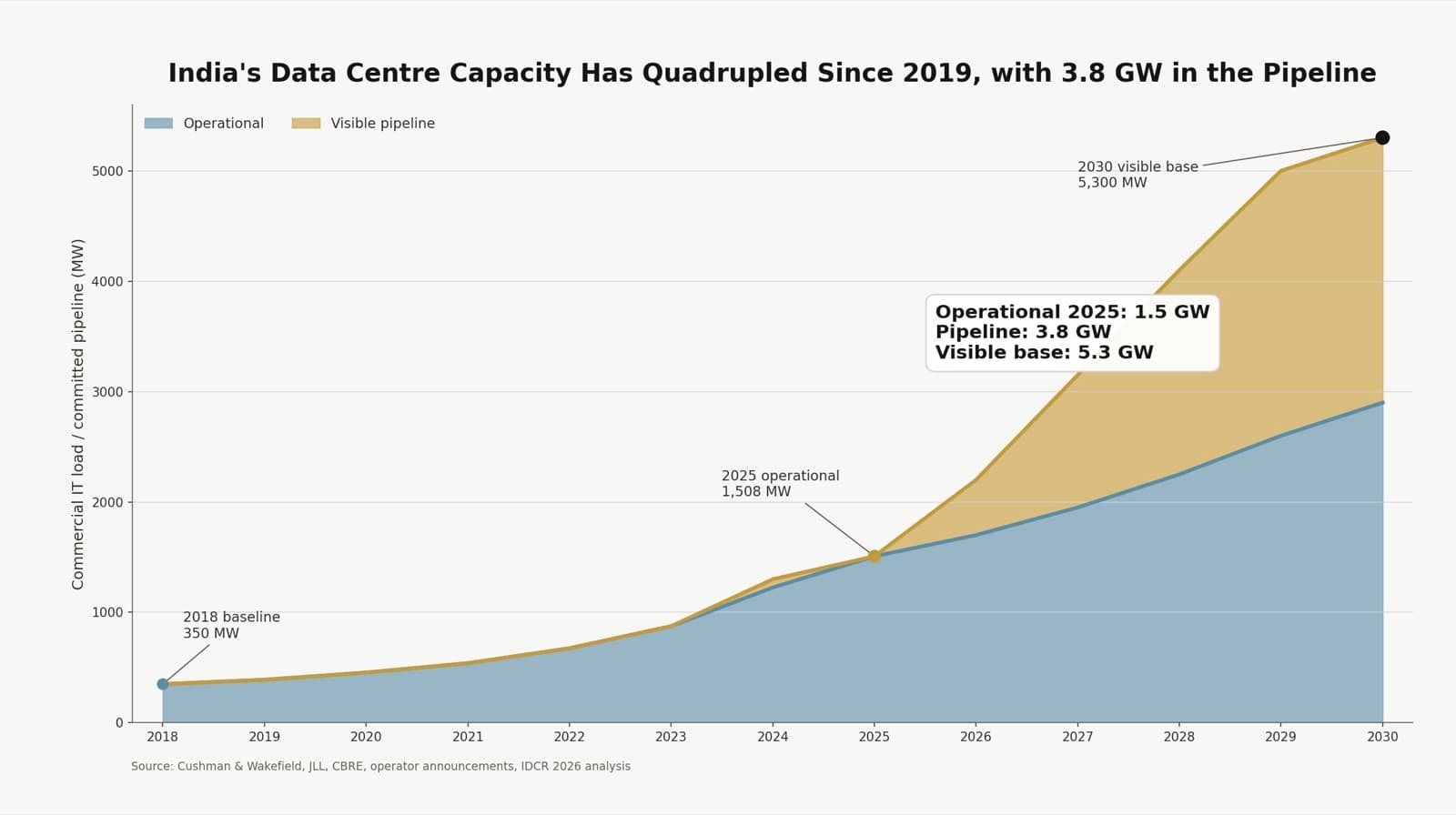
Operational capacity has increased fourfold since 2019. The visible pipeline includes a further 3.8 GW.
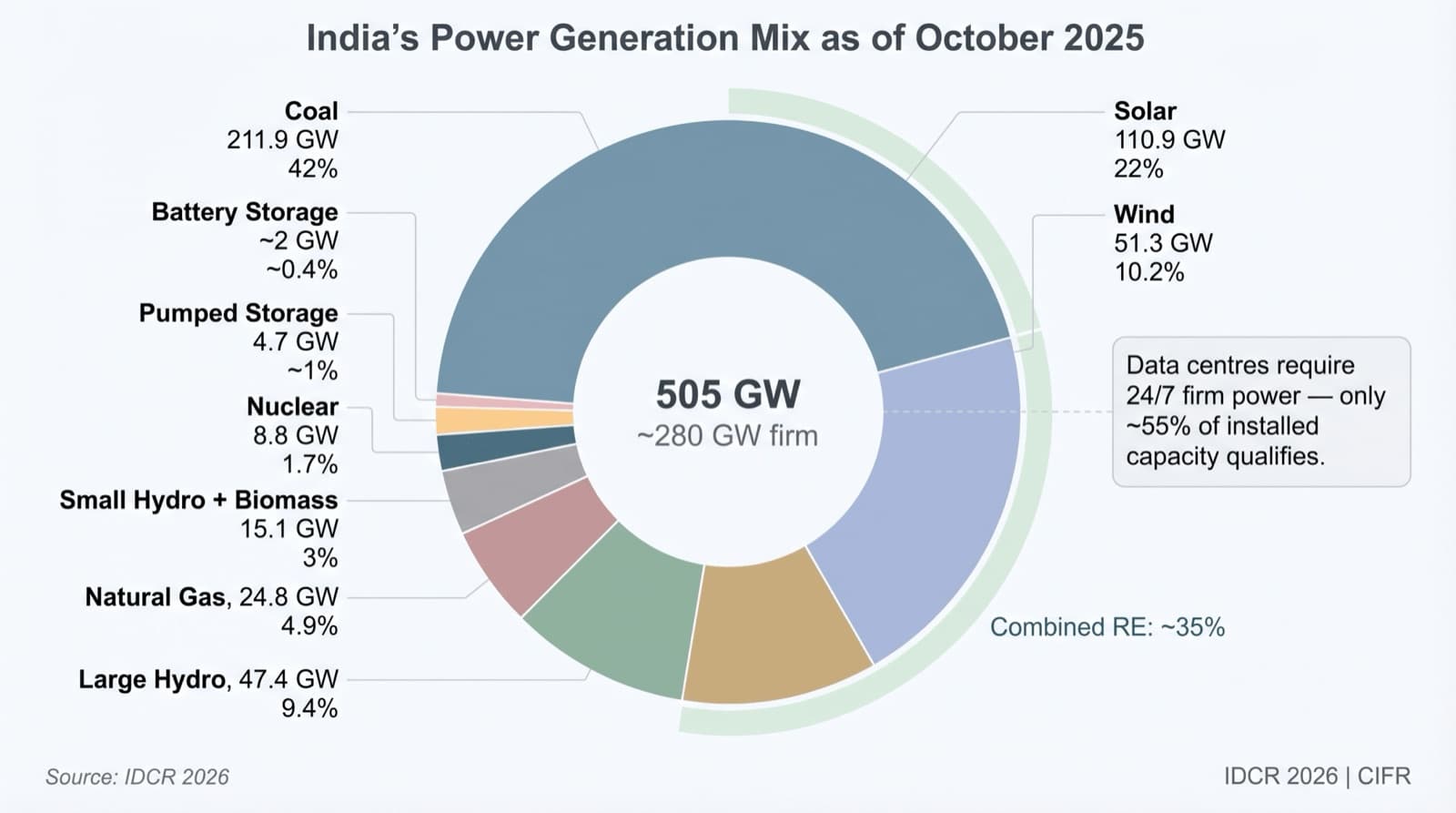
The assessment distinguishes installed capacity from firm 24-hour electricity supply available to data-centre campuses.
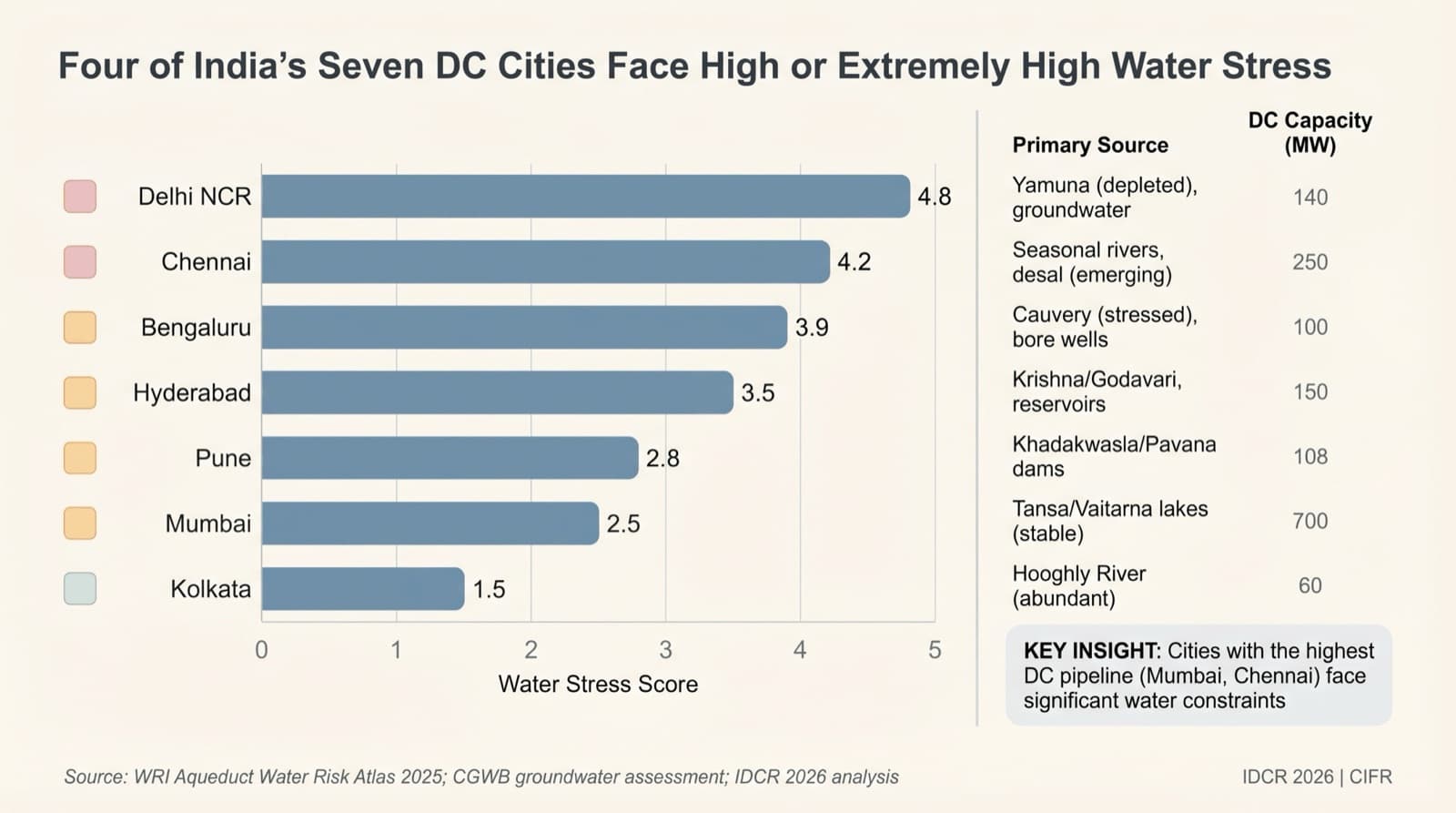
The assessment compares water-stress scores, primary water sources, and installed capacity across seven city markets.
Fourteen chapters cover the market, enabling infrastructure, regulation, investment, sustainability, and the outlook to 2030.
Get the complete PDF“The Review provides an independent reference for data-centre market, infrastructure, and policy assessment.”
City, operator, cost, and project execution benchmarks for investment assessment.
Connection demand, reliability requirements, and firm-power requirements for data-centre growth.
State incentives, approval requirements, and infrastructure constraints affecting project delivery.
Public source notes, definitions, downloadable tables, and citation guidance.
Information on report coverage, intended users, sources, and PDF access.
The 166-page report covers market capacity, seven city markets, operators, investment, substations, power, backup generation, renewable procurement, water and cooling, fiber, policy, demand drivers, global benchmarks, ESG, and the outlook through 2030.
Yes. The complete PDF is complimentary. Submit your name, work email, company, and job title and India Energy Atlas will email a private download link that remains valid for seven days.
It is designed for data-centre operators, hyperscalers, investors, utilities, grid planners, policy makers, equipment vendors, advisers, researchers, and teams evaluating digital-infrastructure opportunities in India.
Yes. It compares Mumbai, Chennai, Hyderabad, Delhi NCR, Bengaluru, Pune, and Kolkata across capacity, power, water, fiber, policy, talent, cost, and execution risk.
Yes. The public IDCR newsroom provides a forecast reconciliation, definitions, dated source links, a recommended citation, and downloadable methodology and data files without requiring registration.
Submit your work details to receive a private download link valid for seven days.